
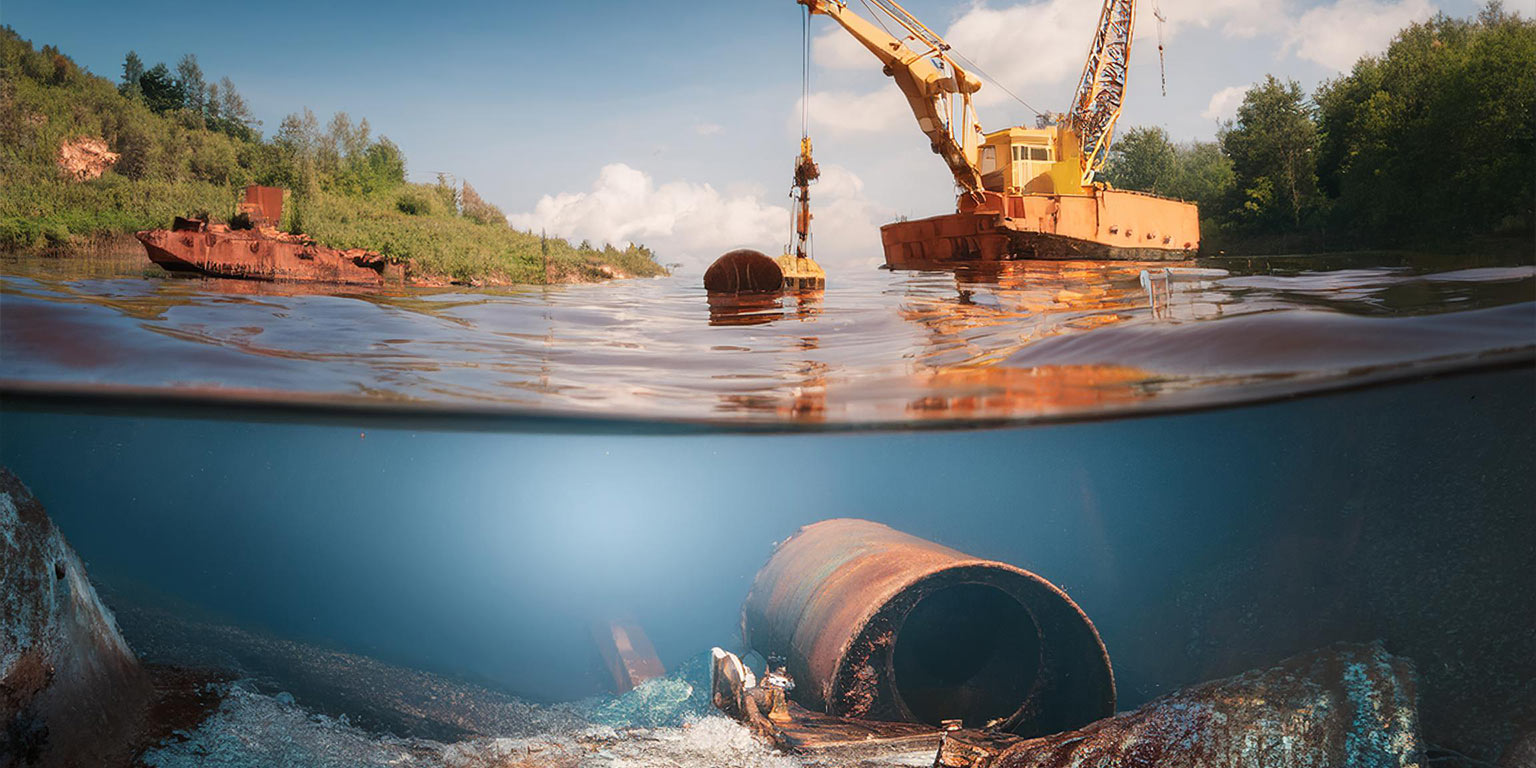
These heavy metals include lead (Pb), mercury (Hg), arsenic (As), cadmium (Cd), and chromium (Cr). Heavy metals are naturally occurring elements within the Earth’s crust. They enter water bodies through various human activities such as industrial discharges, mining operations, agricultural runoff, and inappropriate waste disposal (Balali-Mood et al., 2021). While a minimum amount of these heavy metals has biological benefits, when they are in high concentration, they lead to both health and marine life. Essentially, unlike organic pollutants, heavy metals do not biodegrade. Instead, they remain within the environment, building up in sediments aquatic organisms, and find their way to people in the food chain. Exposure to high levels of heavy metals has severe consequences. Heavy metals bioaccumulate within living
organisms, leading to bioaccumulation and biomagnification along the food chains. Mercury, for instance, bio-accumulate in fish; upon consumption by humans, it results in mercury poisoning, thus affecting neurological functions and cognitive development, especially in children. Lead poisoning causes developmental disorders and cognitive impairment, while cadmium toxicity leads to kidney damage and demineralization of bone (Tchounwou et al., 2021). Besides these effects on organisms, heavy metals change the quality of aquatic ecosystems due to their effects on water chemistry and further affect species diversity and aquatic organisms’ ability to perform normal reproduction and metabolism functions (Ali et al., 2019).
b. Activity: Heavy Metals Pollution in Water
- Dissolve a small amount of zinc chloride in water to make a solution.
- Take three beakers and fill them with different types of soils to the top-sandy, clay, and
organic-rich-placing a filter at the bottom of each to hold the soil in place. - Into each of the beakers that contained soil, pour the same amount of heavy metal
solution to allow filtration into a collection container through the soil. - Collect the filtered water that has passed through each type of soil into beakers placed
under each respective soil column. - Use pH strips to test filtered water from each sample.
- Record and compare the results as tests of pH.
Case study into how heavy metals degrade with water and time The Flint Water Crisis in Flint, Michigan, USA, is one of the most evident case studies of how heavy metals affect water and marine life with time. The water supply was contaminated with lead due to a switch in the water source, raising public health concerns. This crisis revealed poor infrastructure management and how it may heavily affect human health due to heavy metal pollution, especially among children and vulnerable populations. The case study also demonstrates how Flint’s population had been getting water from Detroit’s system through Lake Huron. The river’s water was more corrosive, and additional treatment was called for to prevent
the corrosion of pipes. As a result, lead in the older pipes started into this water supply and contaminated home tap water throughout the city. How do the effects of heavy vary affect water and marine life?
Heavy metals have significant effects on the quality of the aquatic ecosystem and the health of marine life. Metals such as lead, mercury, cadmium, and arsenic are toxic even in small quantities and affect the ecological balance in water. Some of the major impacts that heavy metals have on water and marine life include the chemistry and quality effects. Essentially, heavy metals change the chemical vitality of water and, hence, change its pH, oxygen levels, and nutrient availability. Contaminated water becomes toxic to most living aquatic organisms and, therefore, reduces biodiversity. For instance, high levels of heavy metals can diminish dissolved oxygen in water that fish and other forms of aquatic life highly require. In acidic conditions, metals like aluminum and mercury become more soluble, enhancing bioavailability and toxicity. Another effect is the bioaccumulation and biomagnification. Heavy metals have the tendency to bioaccumulate in the tissues of marine organisms. Once plankton and other species absorb heavy metals, biomagnification increases the level of toxins. Major predatory species that may ingest metals at levels that are possibly harmful are large fish, marine mammals, and even humans who consume seafood. For instance, mercury has a serious effect on fish, such as tuna and swordfish, where its bioaccumulation acts as a toxic substance to human health in large doses.
Heavy metals also interfere with the physiological processes of marine organisms. Heavy metals disrupt the essential biological functions of marine life by interfering with the nervous systems of fish and invertebrates, affecting reproductive capabilities and depressing growth rates. In particular, since mercury is neurotoxic, it contributes to neurological and behavioral problems caused in fish. Additionally, cadmium has been associated with kidney damage and bone demineralization in marine animals.
c. How can we prevent it in the future
The main preventive measures to avoid contamination by heavy metals in the future include policy regulations. It is imperative to enhance government regulations that limit the levels of heavy metals discharged into water bodies. Industrial plants, mining, and agricultural activities must strictly adhere to the standards for effluent discharge in the biosphere. Besides this, industries need to adopt advanced technology for the treatment of wastewater before the heavy metals are released into the water body. Advanced techniques include chemical precipitation, reverse osmosis, membrane filtration, and ion exchange, which have resulted in low metal concentrations. In a number of processes, recovery of some heavy metals from industrial wastewater is possible and can be reutilized, thereby reducing overall pollution. Mining reforms could also be instituted. In practice, heavy metal contamination can be avoided
through the use of sustainable mining. Waste management in mining companies needs to follow best practices to avoid leaching into groundwater. Contamination arising from heavy metals can be reduced through the use of low-metal-content fertilizers and pesticides. Controlled irrigation and precision application methods in fertilizer will reduce excess chemical application and, hence, metal leaching. Buffer zones of vegetation around water bodies absorb runoff and reduce contamination. Shifting reliance from mineral resources to renewable energy sources, such as solar, wind, and hydropower, reduces mining processes and industrial processing involved with metals and could go a long way towards reducing environmental contamination and marine life.
References
Ali, H., Khan, E., & Ilahi, I. (2019). Environmental Chemistry and Ecotoxicology of Hazardous
Heavy Metals: Environmental Persistence, Toxicity, and Bioaccumulation. Journal of
Chemistry, 2019, 1–14. https://doi.org/10.1155/2019/6730305
Balali-Mood, M., Naseri, K., Tahergorabi, Z., Khazdair, M. R., & Sadeghi, M. (2021). Toxic
Mechanisms of Five Heavy Metals: Mercury, Lead, Chromium, Cadmium, and Arsenic.
Frontiers in Pharmacology, 12(643972). https://doi.org/10.3389/fphar.2021.643972
Tchounwou, P. B., Yedjou, C. G., Patlolla, A. K., & Sutton, D. J. (2021). Heavy Metal Toxicity
and the Environment. Experientia Supplementum, 101(1), 133–164.