
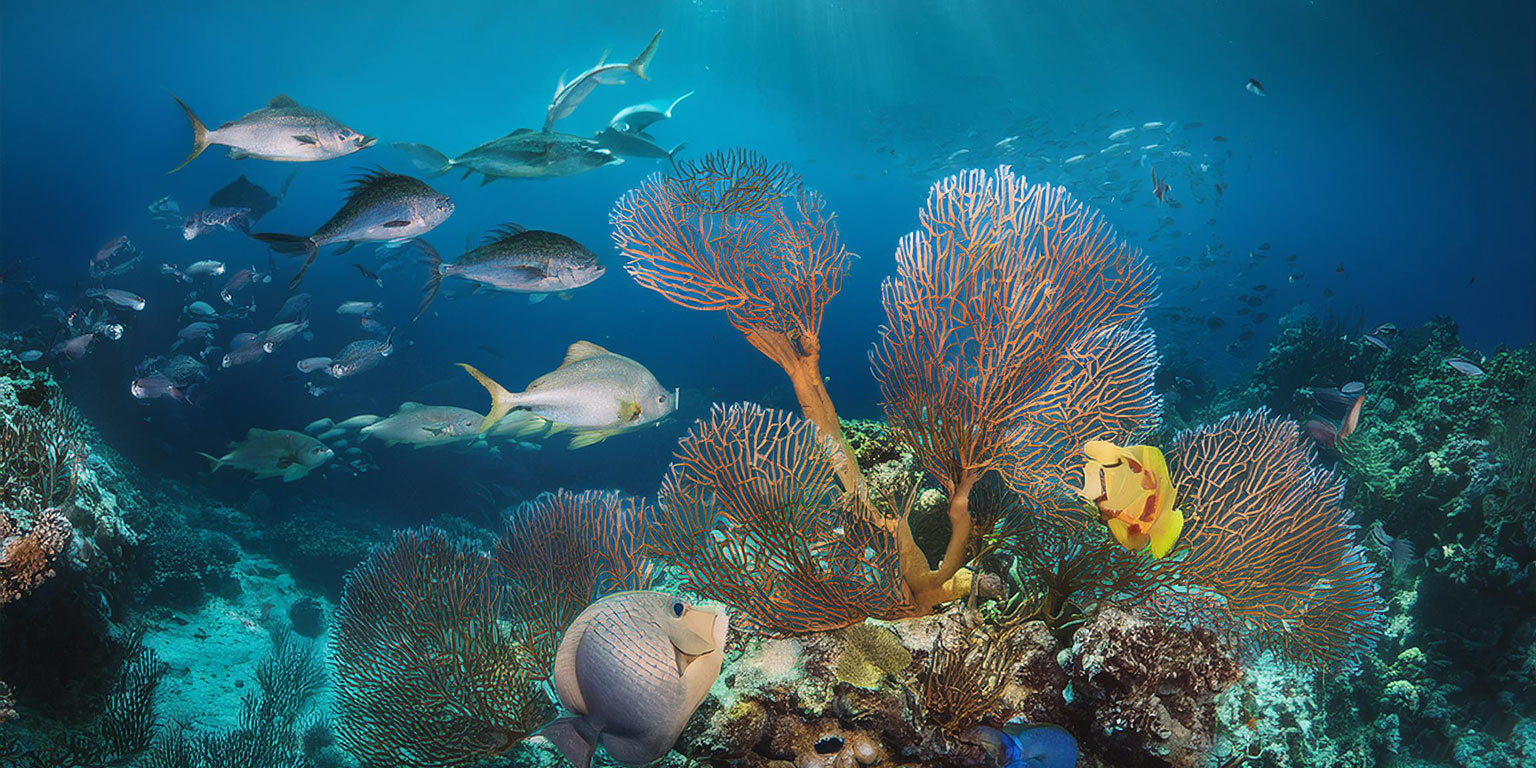
Marine ecosystems exist in different dynamics, with a wide range of different species interacting through complex food webs. A food web in marine ecosystems is an interconnected relation between different organisms, highlighting energy transfer from one level to another in the trophic. The food webs are relatively more complex, as compared to the food chains. They have predator-prey, symbiotic, and environmental interactions. The understanding of these food webs is hence vital to the maintenance of biodiversity, stability of an ecosystem, carbon sequestration, and nutrient cycling (Eddy et al., 2020). In food webs, the structure in marine environments exists as primary producers-structures from where energy flow and organic matter originate. Producers manufacture their food by converting carbon dioxide into organic compounds during photosynthesis, with the use of sunlight energy. These are representatives of the base of most aquatic ecosystems and essentially support everything else higher in the web. Small animals, such as zooplankton, feed upon the next trophic level of phytoplankton, forming
an important link between primary producers and predators (Eddy et al., 2020). The predators feed upon zooplankton, while in turn larger fish, marine mammals, and seabirds feed on them. Each organism within this food web has a place of importance in regard to furthering the balance and functions of any marine ecosystem.
Food webs are inherently sensitive to external stresses, such as the effects of overfishing, habitat destruction, pollution, and climate variations. Human impacts on the marine food systems may create interactions within an ecosystem. For instance, apex predators, like sharks, can be taken out of a system, allowing mid-level predators to artificially become too abundant and overconsume herbivores or other prey species (Lennox et al., 2022). These changes could lead to a massive destruction of the food web and put the entire ecosystem at risk. Climate change also has a significant effect on marine life, from warming sea temperatures to ocean acidification and deoxygenation, which possibly can affect the distribution of species through disruptions in reproductive cycles or changes in their usual migratory patterns. For instance, with increased water temperatures, species may migrate, leaving some ecological gaps that might destabilize a food web (Lennox et al., 2022). Additionally, the highly diverse species in coral reefs make them particularly vulnerable to these alterations. Coral bleaching due to increased temperature and
acidification results in the loss of an important habitat for numerous marine organisms. Further, plastic wastes, particularly microplastics, are ingested through marine organisms at all trophic levels. Such plastics can cause physical harm to the organism, obstruct digestive tracts, and lead to toxic chemical exposure (C. Pothiraj et al., 2023).
Activity: Analyzing a Home-made Marine Food Web
The experiment requires the use of plastic beads (microplastics), distilled water, colored water
(to represent the plankton), small paper fish cutouts, a glass container, and large cutouts of fish.
- Hall-fill the glass with distilled water, then add the plastic beads.
- Add 6 drops of the colored water into the glass containing the distilled water.
- Place a few small-paper fish cutouts to represent the primary consumers, and observe the
ingestion. - Using a strainer, simulate the process of feeding before introducing the secondary
consumers. - Now add large cutouts of fishes into the same glass containing water as the secondary
consumers (predators), and observe the feeding behavior. - Observe, and note the movement of the plastic beads throughout the different trophic
levels, and record which species ingest them most.
Future: Decline in marine species and disruption of food chains
With the advent of industrialization and pollution, the food webs in the marine environment are likely to be increasingly disrupted, leading to massive deaths of animal species and irreversible changes in marine ecosystems. Essentially, more than 62.3% of the world’s marine fisheries were reported by FAO (2024) as overexploited, and many more are at risk of becoming unsustainable for consumption. As a result, the population of predators depending on these fishes for food is also on a declining trajectory, whose aftermath will be predator-prey relationship disruptions and ecosystem imbalances. Additional threats from climate change bear heavily on the future of marine food webs. For instance, variability and rising sea temperatures are seen to produce more frequent and intense marine heat waves. These heatwaves cause mass die-offs among marine organisms; the coral bleaching events have devastated reefs around the world. With no healthy coral reefs, a myriad of species that depend on them for protection and
nutrition will hardly survive, further destabilizing the food web. Increased acidity in the ocean reduces the ability of corals, shellfish, and certain plankton-type species to build their respective shells and skeletons, leading to a massive decline of these species and escalating the effects through the food web. Changes in ocean currents resulting from global warming can disrupt the flow of marine species, disrupt migration routes, and change predator and prey interactions. For instance, shifting to cooler waters, where a fish population might find better survival conditions, would impact their predator’s feeding habits because they may decrease or shift their home range in search of prey. These can trigger a cascading impact throughout the food chain, including ecological disruption.
Mitigation: Beach cleanups, recycling programs for improved food webs
Mitigation measures include cleanups along beaches and other activities for improved food webs in marine environments. Beach cleanups include the collection of plastic wastes and other debris from coastlines before they enter the ocean. The majority of NGOs and local communities often conduct regular cleanups along beaches as a method of creating awareness about marine pollution and contributing toward a reduction in the quantity of plastic reaching the marine environment. However, these activities need to be complemented by broader measures aimed at reducing the production of plastics and enhancing waste management systems. Apart from beach cleanups, governments and industries need to pursue more effective recycling programs to avoid allowing plastic waste to enter the ocean in the first place. It is also imperative to educate people on the need to use biodegradable materials, reduce single-use plastics, and promote circular economies that reduce plastic entry into marine ecosystems.
References
C. Pothiraj, Tamilselvan Gokul, Kamatchi Ramesh Kumar, Arumugam, R., Ayyappan
Palanichamy, Venkatachalam, K., Pastorino, P., Damià Barceló, Balaji Paulraj, & Faggio,
C. (2023). Vulnerability of microplastics on marine environment: A review. Ecological
Indicators, 155, 111058–111058. https://doi.org/10.1016/j.ecolind.2023.111058
Eddy, T. D., Bernhardt, J. R., Blanchard, J. L., Cheung, W. W. L., Colléter, M., du Pontavice, H.,
Fulton, E. A., Gascuel, D., Kearney, K. A., Petrik, C. M., Roy, T., Rykaczewski, R. R.,
Selden, R., Stock, C. A., Wabnitz, C. C. C., & Watson, R. A. (2020). Energy Flow
Through Marine Ecosystems: Confronting Transfer Efficiency. Trends in Ecology &
Evolution, 36(1). https://doi.org/10.1016/j.tree.2020.09.006
FAO. (2024). The status of fishery resources. Fao.org.
https://openknowledge.fao.org/server/api/core/bitstreams/131ab804-f871-4562-bd0d-
2457ebad0e47/content/sofia/2024/status-of-fishery-resources.html
Lennox, R. J., Brownscombe, J. W., Darimont, C., Horodysky, A., Levi, T., Raby, G. D., &
Cooke, S. J. (2022). The roles of humans and apex predators in sustaining ecosystem
structure and function: Contrast, complementarity and coexistence. People and Nature,
4(5). https://doi.org/10.1002/pan3.10385