
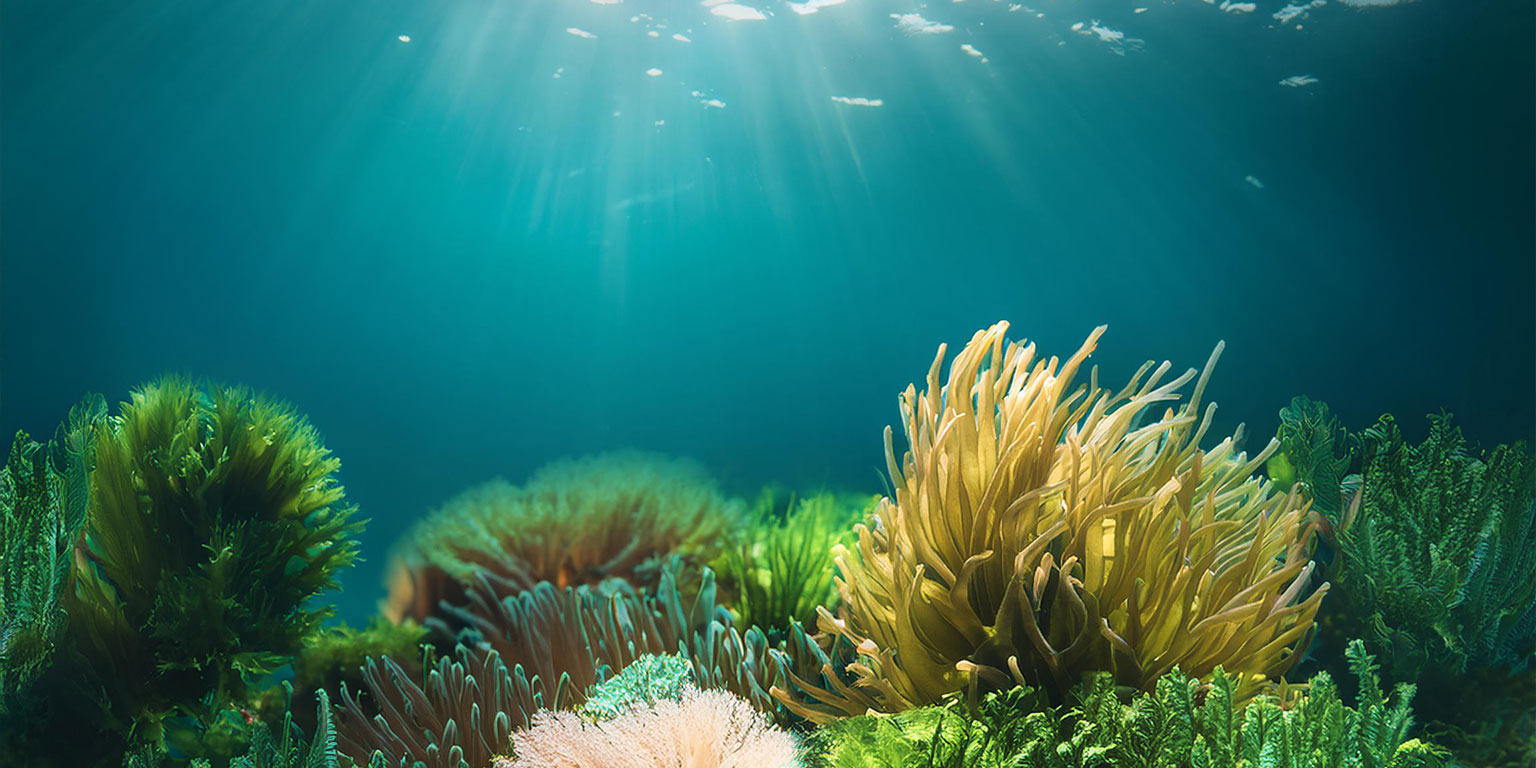
Types of marine algae, their ecological roles, and potential commercial uses. Marine algae are an integral plant species in the marine ecosystems. The algae are broadly classified into three categories; the green algae (Chlorophyta), the brown algae (Phaeophyceae), and the red algae (Rhodophyta) (Ahmed et al., 2024). Each of these classes is found in a different ecological niche coastal environment. They are also differentiated in terms of how they conduct their biological processes of the carbon cycle, producing oxygen and absorbing the carbon dioxide gases contained in the atmosphere, which makes them helpful
against climate change (Ahmed et al., 2024).
Ecologically, algae have provided food and habitat for innumerable marine organisms- the foundational food web in the sea. Underwater forests formed, like kelp beds, are a variety of brown algae. These provide fundamental breeding and nursery grounds for fish and invertebrates, among other marines (Cotas et al., 2023). Further, algae, in their interaction with nutrients from seawater, decrease harmful algal blooms and eutrophication, hence keeping a balance in marine ecosystems. Commercially, marine algae are important in quite a few industries. Red algae provide agar and carrageenan, which are used as gelling and thickening agents in food and cosmetics. Brown algae offer alginates useful in food processing, paper, and pharmaceuticals. Green algae are used in dietary supplements due to their content rich in protein and nutrients. Most of their extracts are incorporated into products regarding human health improvement enhancement, such as spirulina and chlorella (Liao et al., 2021). Algae can be used for carbon capture, with large amounts of carbon dioxide being absorbed during photosynthesis. This property makes algae very useful in the reduction of atmospheric CO2 levels, and hence, it is a contributor to climate change mitigation.
Activity: Cultivating marine algae and exploring its uses in biofuels and food In cultivating the marine algae:
- Select the species to use, either Chlorella or Spirulina, a species of algae.
- Prepare a BG-11 nutrient-rich medium or use wastewater.
- Set up the containers using clear tanks that allow penetration of light.
- Sterilize all the equipment to prevent contamination.
- Inoculate the selected algae species into the medium.
- Provide a unidirectional light source of light of 12-16 hours using direct sunlight.
- Aerate carbon dioxide gases to ensure effective culturing using a stirring spectrophotometer.
- Monitor the growth process of the algae species daily using the spectrophotometer.
- Once the algae species have reached the peak growth level, centrifugate or filter them.
- Dry all the algae and weigh the biomass to determine the yield and analyze the percentage content of lipids in the biofuels. The algae are relatively important in the manufacture of biofuels and food products. In particular, lipids from the cells of algae are extracted and then converted into fuel by a process known as transesterification. However, the algae have the potential of producing up to 10-fold higher oil yield per area than any conventional terrestrial biomass feedstock. Additionally, the
algae can grow very fast on land and do not compete for freshwater with food crops. Some species have very good potential for the production of bioethanol and biogas, further expanding the role of algae in renewable energy. There are, however, problems in scaling up production because of cultivation and harvesting methods that are both energy-intensive and expensive. - Research is, therefore, in the process of being done to improve algae strains and develop
- integrated biorefineries that can extract multiple products as biofuels, fertilizers, and high-value
- chemicals from a single harvest of algae.
Future: Sustainable biofuel production, nutritional supplements The future of biofuels and their economic potential are promising. In particular, the development of genetic engineering enhances the content of lipids in algae strains with a minimum usage of cultivation resources. Integration biorefinery is a promising development that could lead to lower production costs and greater sustainability, where algae can be used for various products like fuels, animal feed, and chemicals. Additionally, the algae do not compete with the plant-growing sector of agriculture for productive land and fresh water. They can be
grown in salt or brackish water or even wastewater, making them an ideal feedstock for biofuel for countries or regions that have limited arable lands. As the global population increasingly turns to sustainable, plant-based, and nutrient-rich foods, this segment is expected to enhance fast growth for algae-based nutritional supplements. The interest of algae within the nutraceutical industry is due to their bioactive compounds, including polysaccharides, antioxidants, and omega-3 fatty acids, showing anti-inflammatory, cardiovascular properties, and boosting immune systems. Moreover, algae can be farmed more sustainably compared to traditional food crops. They have minimal input requirements for fertilizers and pesticides; plus, they can be harvested all year round. As plant-based diets continue to rise in popularity, it’s possible that algae-based food and supplements will be very critical in the future. Research: Developing efficient algae cultivation techniques and exploring new applications. There has been continued biological research being conducted to improve the methods of cultivation with the aim of increasing yields, cutting down on production costs, and creating more varieties of algae that can be cultivated commercially. Improved genetic engineering and metabolic engineering will be essential in the optimization of algae for biofuel production by enhancing lipid content and photosynthesis. New forms of cultivation systems, such as vertical farms and offshore algae farms, can boast very bright prospects in the case of large-scale algae production without interfering with arable land. Other areas of research have been focused on the newer applications of algae in the production of bioplastics, textiles, and other industrial products. Algae-based bioplastics are biodegradable and can be produced at a much more environmentally friendly level, having a much lower carbon footprint than those produced from petroleum-based products. Algae fibers have been used to develop eco-friendly fabrics and can be used as an alternative to synthetic fibers. However, biofuels and food, among others, would require continued investment in research. Partnerships between academia, government, and private industries would be very important to drive innovation and make a way through challenges towards the commercial-scale production of various algae-based products.
References
Ahmed, N., Mohd Aaqib Sheikh, Ubaid, M., Chauhan, P., Kumar, K., & Choudhary, S. (2024).
Comprehensive exploration of marine algae diversity, bioactive compounds, health
benefits, regulatory issues, and food and drug applications. Measurement. Food, 14,
100163–100163. https://doi.org/10.1016/j.meafoo.2024.100163
Cotas, J., Gomes, L., Pacheco, D., & Pereira, L. (2023). Ecosystem Services Provided by
Seaweeds. Hydrobiology, 2(1), 75–96. https://doi.org/10.3390/hydrobiology2010006
Liao, Y.-C., Chang, C.-C., Nagarajan, D., Chen, C.-Y., & Chang, J.-S. (2021). Algae-derived
hydrocolloids in foods: applications and health-related issues. Bioengineered, 12(1),
3787–3801. https://doi.org/10.1080/21655979.2021.1946359