
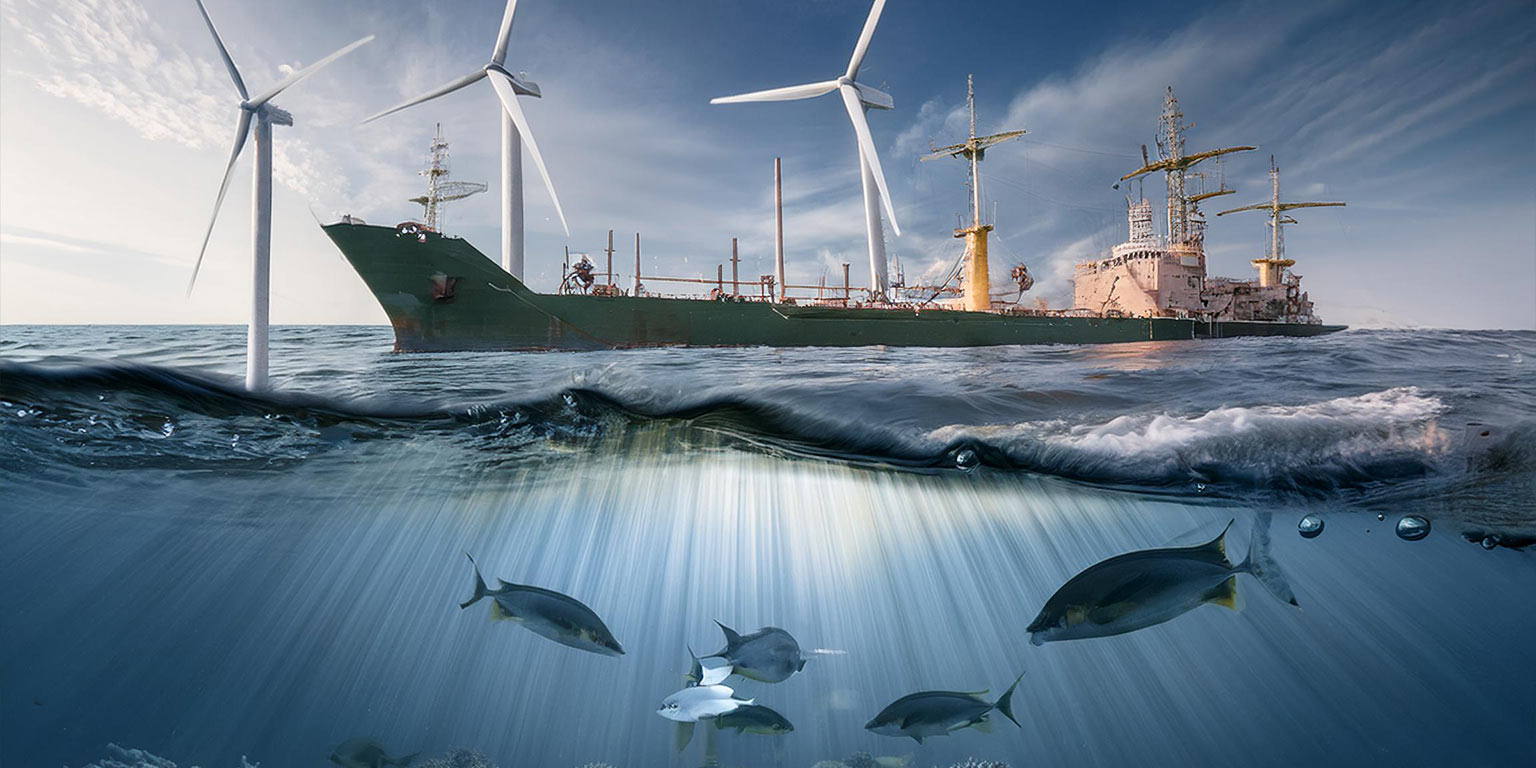
Background: Effects of underwater noise pollution on marine animals
Noise pollution in oceans and other water bodies is created by different human activities,
including oil exploration, commercial shipping, offshore wind turbines, and seismic surveys.
These activities create excessive and unnatural sound under the waters, which affects marine life.
In particular, the created noise usually interferes with the hearing ability of water mammals, with
further consequences on behavioral abilities, such as effective communication (Iflaw, 2024).
Whales, dolphins, and fishes, among other water animals relying on vocalizations as a means of
communication, are adversely affected by noise, as they cannot detect, hunt, and coordinate
effectively. Oceanic noise also has massive effects on the animals that use echolocation,
including the toothed whales and dolphins. When the noise levels are high in the waters, signals
are disrupted, such that animals cannot easily hunt. High levels of background noise in the
oceans are associated with 250,000 vessels traveling through global ocean waters (Iflaw, 2024).
Additionally, cargo ships could produce 190 decibels. This noise level is higher than the sound
produced by a plane while taking off or at a rock concert. Importantly, the speed of sound is
relatively higher compared to air, an indication that high noise levels in water could lead to
massive effects on the water animals and the habitats (Knowlton, 2020).
Activity: Measuring sound levels in different water environments.
- Using a hydrophone as a detecting device produces sound in water.
- Activate the hydrophone sound using a piezoelectric material to convert the sound
produced into an electrical signal. - Increase the strength of the electrical signals produced in step 2 above using an amplifier.
- Connect the signals that have been amplified to a recording device in order to capture the
sound for analysis. - Using analysis software, measure the different characteristics, including the pitch, the
volume, and the amplitude of sound.
Future: Disruption of communication and navigation in marine species.
Noise pollution in the water, largely anthropogenic, stemming from shipping, industrial
activities, and naval exercises, has serious effects on the acoustic environment in which many
marine organisms live, as earlier highlighted. In the future, this trend is likely to escalate the
effects on the survival and health of marine species, ecosystems, and biodiversity within oceanic
environments. As noise levels increase with anthropogenic sources, the ability for these acoustic
signals to be depended on by various marine species is being compromised. Noise pollution was
causing an increasing breakdown in communication among marine species. Marine animals have
employed greater background noise mask sounds for communication. This application, however,
poses a great danger to marine species that rely on sound to communicate during mating and
socializing. The North Atlantic right whales communicate in low-frequency calls for mates and
with increased background noise produced by ships. The noise reduces the ability to hear one
another. As a result, they may not be able to locate any mates, which diminishes the reproductive
outcome and further threatens the species. Furthermore, noise levels are likely to break down
communication, which is likely to contribute to social isolation in groups of marine animals.
Species like dolphins, whose vocalizations are the means through which units hold together and
coordinate their activities, may find that they cannot hear one another through the din of human-
generated noise, leading to a serious breakdown in with far-reaching detriments in hunting
strategy.
Besides communication, sound is important for the navigation of different marine
species. Echolocation is used in orientation and finding food for many animals, from fish to
marine mammals. Enhanced underwater noise interferes with these navigation methods. As noise
levels continue to increase, this navigation is severe. As an improvement, the echolocation
signals can be masked by increasing background noise levels, impairing animals from locating
prey effectively. This impairment also affects the success of foraging but also increases the risk
of collisions with vessels and other hazards. For migratory species, this includes fish and marine
mammals for whom any disruption to navigation has serious repercussions. Increased noise
pollution interferes with the ability of animals to perceive the navigational cues; disoriented, they
might alter their migratory routes. This interference is likely to impact the access of species to
essential habitats, breeding, and feeding grounds, thus affecting the population dynamics and
even ecosystem health.
Mitigation: Regulating noise pollution, creating quiet zones in oceans.
i. Regulating Noise Pollution One of the most effective ways of controlling noise is by regulating the noise levels from ships and industrial activities. This regulation can be achieved by governments and international organizations developing and enforcing specifications that limit the sound output from shipping, construction, and diverse activities carried out by navies. For instance, the IMO (International
Maritime Organization) can promote best practices in the design and operation of vessels, highlighting quieter technologies. These practices can be done through various measures that include displaying a reduced rate of speed in sensitive areas, fastening quieter engines, and changing propeller designs to reduce cavitation. Besides this, actual noise reduction standards can be used for underwater construction processes, such as pile driving or dredging activities in marine environments. Noise mapping studies can also be incorporated to determine the hotspots of underwater noise pollution. This mapping can help policymakers develop stringent measures for noise regulation, thereby encouraging industry players, scientists, and regulatory agencies to collaborate in the management of underwater noise pollution (Findlay, 2023).
ii. Creating Quiet Zones in Oceans
Quiet zones are marine protected areas set aside within the oceans where noise pollution is minimal. These areas serve as havens for many marine species that depend upon sound for communication, navigation, and foraging. Setting these zones involves the prohibition or restriction of activities such as shipping or naval exercises in various areas known to be ecologically sensitive or habitats of vulnerable species. Quiet zones could be established in specific areas; for instance, areas crucial for whale migration or breeding activity should, for that matter, not be disturbed by anthropogenic noise. Such quiet zones can also enable scientific research and monitoring of the responses of marine species to a reduction of noise.
References
Findlay, C. (2023). Noise Management – OCEAN GOVERNANCE MARINE MAMMALS. Marine
Mammals Management ToolKit. https://marine-mammals.info/noise-management/
Iflaw. (2024). Ocean Noise Pollution Explained | IFAW. IFAW.
https://www.ifaw.org/international/journal/ocean-noise-
pollution#:~:text=Underwater%20noise%20pollution%20can%20change
Knowlton, C. (2020, July 1). How does shipping affect ocean sound levels? Discovery of Sound
in the Sea. https://dosits.org/science/sounds-in-the-sea/how-does-shipping-affect-ocean-
sound-levels/